Christopher Nolan’s The Odyssey and the Pramnian Wine of Ikaria
With the release of Christopher Nolan’s The Odyssey, Homer’s world has once again captured the global imagination.
Written and directed by Nolan, the film transforms Homer’s foundational story into a mythic action epic, following Odysseus on his long and dangerous journey home after the Trojan War. The film features Matt Damon, Tom Holland, Anne Hathaway, Robert Pattinson, Lupita Nyong’o, Zendaya and Charlize Theron.
Yet beyond the gods, monsters, battles and storms, Homer’s poems preserve another fascinating connection with the ancient world: Pramnian wine.
This legendary wine appears in both the Iliad and the Odyssey. For the people of Ikaria, it is more than a literary detail. It represents one of the earliest links between the island, its vineyards and the cultural memory of wine.
The wine hidden inside Homer’s epics
Pramnian wine appears twice in Homer’s poetry, but with two very different roles.
In the Iliad, it is part of a strengthening drink prepared for warriors. In the Odyssey, it becomes an ingredient in one of the most famous magical mixtures in world literature.
The same wine can restore strength, carry medicine or become a vehicle of enchantment. In both stories, Pramnian wine possesses something beyond ordinary refreshment: concentration, intensity and transformative power.
Pramnian wine in the Odyssey
Pramnian wine appears again in Book 10 of the Odyssey, during Odysseus’ encounter with Circe.
Circe welcomes Odysseus’ companions and prepares a mixture of cheese, barley meal, honey and Pramnian wine:
“τυρόν τε καὶ ἄλφιτα καὶ μέλι χλωρὸν
οἴνῳ Πραμνείῳ ἐκύκα”
In plain English:
“She mixed cheese, barley meal and golden honey into Pramnian wine.”
Circe then adds powerful herbs to the drink so that the men will forget their homeland.
Here, Pramnian wine becomes part of an enchanted cup. Its purpose is no longer to restore memory and strength, as in the Iliad, but to dissolve them.
This contrast is one of the most fascinating details in Homer. In one epic, Pramnian wine helps warriors recover. In the other, it carries the danger of forgetting who they are and where they belong.
Pramnian wine in the Iliad
In Book 11 of the Iliad, the wounded healer Machaon is taken away from the battlefield by Nestor. Hecamede prepares a drink for them using Pramnian wine, goat’s cheese and barley meal.
“οἴνῳ Πραμνείῳ, ἐπὶ δ’ αἴγειον κνῆ τυρὸν
κνήστι χαλκείῃ, ἐπὶ δ’ ἄλφιτα λευκὰ πάλυνε”
A plain-English rendering would be:
“She mixed Pramnian wine, grated goat’s cheese over it and sprinkled it with white barley meal.”
The resulting drink was known as kykeon. It was not simply wine served for pleasure. It was nourishing and restorative, offered after the exhaustion and violence of battle.
In this scene, Pramnian wine is connected with recovery, strength and healing.
What was Pramnian wine?
The ancient texts do not provide the equivalent of a modern winemaking recipe or technical sheet. We cannot recreate Pramnian wine with absolute archaeological certainty.
Ancient writers, however, repeatedly describe it as a wine of remarkable strength and character. It was often presented as concentrated, austere and powerful rather than light or easy-drinking. Some accounts associate it with medicinal preparations, while others connect its name directly with the Ikarian mountain of Pramnos.
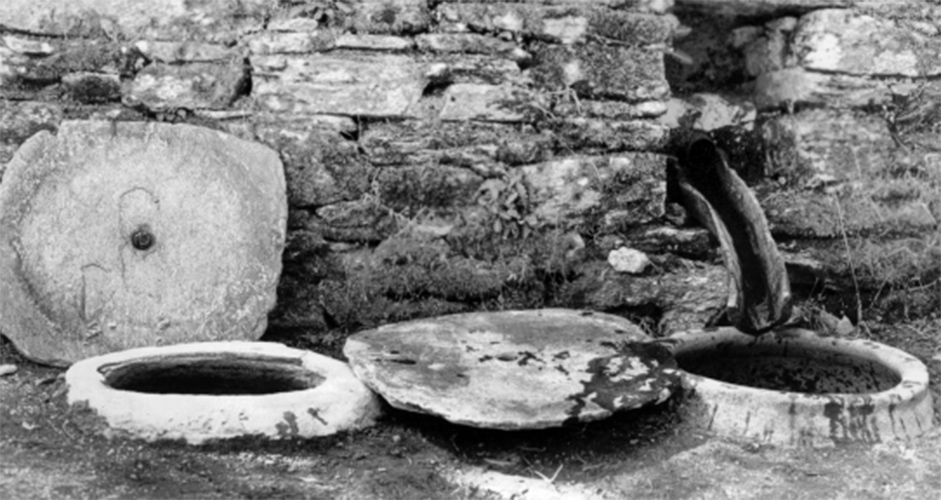
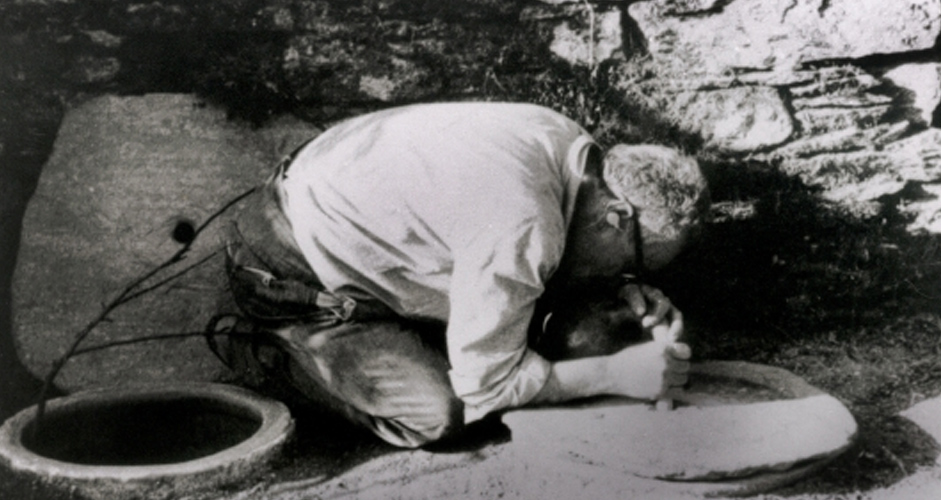
The name Pramnos has survived in Ikaria and remains associated with the island’s long mountain range, now more commonly known as Atheras. According to the historical tradition recorded by Afianes Wines, vines were cultivated on its terraced slopes and the resulting wine became known throughout the ancient world.
Pramnian wine may therefore be understood not only as a style of wine, but also as an early expression of identity: a wine whose reputation was connected with a particular landscape, culture and place.
Ikaria, the island behind the Homeric wine
Ikaria’s relationship with wine reaches deeply into mythology and history.
The island was associated with Dionysus, the god of wine, vegetation and transformation. Ancient place names, archaeological discoveries and local traditions suggest that the worship of Dionysus once played an important role in Ikarian life.
Wine was not separated from food, healing, celebration or community. It belonged to the rhythm of daily life and to the relationship between people and the land.
That relationship continues today. Ikaria remains known for its mountain vineyards, granite-rich soils, local grape varieties and a culture in which wine is shared slowly, usually around a table and in the company of others.
A modern Ikarian interpretation of the Pramnian tradition
At Afianes Wines, we do not claim to reproduce an ancient wine exactly as it existed in Homer’s time.
Instead, we work to preserve the deeper elements of the Pramnian tradition: local grapes, concentrated character, natural winemaking, long ageing and a profound connection with the land of Ikaria.
Among our wines, the collection that most closely expresses the intense, concentrated and age-worthy side of this heritage is our collection of natural sweet wines from Ikaria.
These wines are made from Fokiano, one of Ikaria’s indigenous red grape varieties. The grapes are harvested by hand after achieving exceptional maturity. Depending on the vintage, dehydration takes place naturally on the vine and on traditional frames, concentrating the fruit’s sugars, aromas and structure.
Fermentation takes place with wild indigenous yeasts, followed by patient maturation. The resulting wines combine natural sweetness with high acidity, warmth and remarkable depth.
Aromas of dried fruit, fig, honey, mature grapes, herbs, mushrooms and truffle can emerge as the wines evolve. Their richness is not simple or heavy. Acidity gives them energy, while time brings greater complexity and length.
The TAMA 2008 and TAMA 2009 vintages, for example, are produced entirely from Fokiano and were created for extended ageing. Only 500 bottles of each vintage were produced.
Wine, memory and the meaning of home
At its heart, the Odyssey is a story about the struggle to return home.
Odysseus faces storms, monsters, temptation and the intervention of the gods. Yet perhaps his greatest challenge is preserving the memory of who he is.
This is why Circe’s Pramnian mixture carries such symbolic importance. Her drink threatens to make Odysseus’ companions forget their homeland completely.
Wine normally connects people with memory: a particular harvest, a family table, a landscape or a moment shared with others. Circe reverses this meaning. Her wine becomes a drink of forgetfulness.
The wines of Ikaria represent the opposite journey.
They carry the memory of their place with them: the granite terraces, the mountain winds, the indigenous Fokiano grape, the long summers and the knowledge passed from one generation to the next.
Every bottle becomes a form of return.
From Homer’s cup to the modern Ikarian vineyard
Long before cinema, Homer placed Pramnian wine inside two of the most influential works ever written.
Today, Christopher Nolan brings the world of the Odyssey to a new generation. The scale of the film may be modern, but the questions at the heart of the story remain ancient: What does it mean to belong somewhere? What do we carry with us? What helps us remember the way home?
On Ikaria, part of that ancient world still survives through the vineyard.
The techniques have evolved, and today’s wines cannot be presented as exact replicas of Homer’s Pramnian wine. Nevertheless, the relationship between wine, landscape, time and memory remains alive.
To understand Pramnian wine is not only to search for an ancient flavour. It is to discover the island that gave the wine its identity.
Discover the wines and traditions of Ikaria
Explore the natural sweet wines of Ikaria and discover a rare expression of Fokiano, natural concentration and long ageing.
Read the complete story of Ikarian wine and the Pramnian tradition.
Discover our natural wines from Ikaria or experience the island’s winemaking culture through a guided tour and tasting at Afianes Wines.
Homer’s heroes encountered Pramnian wine in poetry.
In Ikaria, the journey continues in the vineyard and in the glass.
This independent article explores the cultural connection between Homer’s Odyssey, Pramnian wine and Ikaria. Afianes Wines is not affiliated with, sponsored by or endorsed by Christopher Nolan, Universal Pictures or the producers of the film.